
British Values
At Woodlands Infant School, we actively promote the fundamental British Values of democracy, the rule of law, individual liberty, mutual respect and tolerance of those with different faiths and beliefs. These values form part of pupils’ spiritual, moral, social and cultural development and help prepare them to participate positively in life in modern Britain.
Because our pupils are young, British Values are introduced in ways that are meaningful and appropriate to their age. They are not taught only through individual lessons. They are woven through our curriculum, assemblies, relationships, routines, pupil voice, play, school values, Pocket Principles and the wider life of Woodlands.
Democracy
What it means for young children
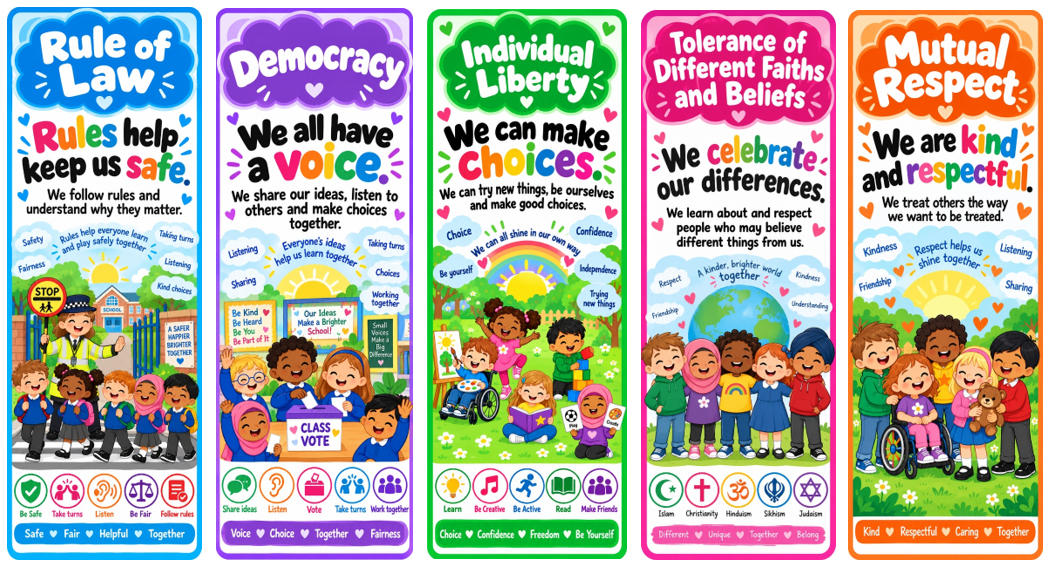
Democracy means understanding that everyone’s views matter. Children learn that people may have different ideas, that everyone should have an opportunity to contribute and that some decisions can be made fairly by listening, discussing and voting.
What it looks like at Woodlands
At Woodlands, pupils are encouraged to express their ideas and know that adults will listen to them. They contribute through pupil voice activities, class discussions, surveys and voting where appropriate.
During lessons, pupils learn to take turns, listen carefully and respond respectfully to the ideas of others. Teachers use talk partners, group discussion and questioning so that all pupils have opportunities to participate.
Pupils also learn that democracy involves responsibility. They may not always get the outcome they personally wanted, but they learn to accept fair decisions and continue to treat others with respect.
The Rule of Law
What it means for young children
The rule of law means understanding that rules help to keep people safe, protect the rights of others and enable communities to work well. Children learn that rules apply to everyone and that choices have consequences.
What it looks like at Woodlands
Our Pocket Principles help pupils understand the expectations that guide school life:
- Be Kind
- Be Responsible
- Be Respectful
- Be Ready to Learn
Clear classroom routines and consistent expectations help children feel safe and understand what is expected of them.
Through assemblies, relationships and health education, stories and everyday conversations, pupils explore fairness, right and wrong and the reasons why rules are needed. Restorative conversations help pupils reflect on their choices, understand how their actions have affected others and consider how they can put things right.
Pupils also learn about rules that keep them safe, including road safety, online safety, safe use of equipment and knowing when to seek help from a trusted adult.
Individual Liberty
What this means for young children
Individual liberty means being able to make choices, share ideas and develop as an individual, while understanding that our choices must be safe and must respect the rights of other people.
What it looks like at Woodlands
At Woodlands, pupils are encouraged to develop confidence, independence and self-belief. They are given age-appropriate opportunities to make choices within their learning, play and wider school experience.
Pupils learn that it is acceptable to have their own interests, preferences, beliefs and opinions. They are encouraged to ask questions, explain their thinking and express themselves through talk, writing, creativity, music, movement and play.
Children are also taught how to make informed and safe choices. Through relationships and health education, safeguarding teaching and online safety, they learn about personal boundaries, trusted adults, asking for help and recognising situations that may not feel safe.
Our nurture-informed approach helps children develop the confidence to express their feelings and needs while gradually becoming more independent.
Mutual respect
What this means for young children
Mutual respect means recognising that every person is important and deserves to be treated with kindness, fairness and consideration.
What it looks like at Woodlands
Respect and Kindness are central to our school values and everyday expectations.
Pupils learn to:
- listen when others are speaking
- take turns and share
- work and play cooperatively
- value other people’s ideas
- care for school property and the environment
- use kind and respectful language
- recognise when their actions have affected someone else
- celebrate the achievements of others
Our curriculum includes diverse stories, people, families, cultures and experiences so that pupils see that everyone has a valuable place within our school and wider society.
Adults model respectful relationships and help pupils resolve disagreements calmly. We teach children that they can disagree with someone’s idea while continuing to treat that person with respect.
Tolerance of different faiths
What this means for young children
This means understanding that people may have different religions, beliefs, traditions and ways of life. Children learn to be interested in these differences, ask respectful questions and treat everyone fairly.
What it looks like at Woodlands
Woodlands is a diverse community and we value the backgrounds, languages, cultures, faiths and experiences represented within our school.
Through religious education, assemblies, stories, music, art, history, geography and wider curriculum experiences, pupils encounter a range of religions, beliefs, celebrations and traditions. They learn about both differences and the important things people share, including family, belonging, kindness, hope and community.
Where appropriate, families and members of the community help children learn about their experiences and traditions. Pupils are encouraged to ask thoughtful questions and listen respectfully to the answers.
We challenge stereotypes and language or behaviour that could make others feel excluded. Children learn that nobody should be treated unfairly because of their faith, beliefs, family, background or identity.